
- Direct solar-powered chemical vapor deposition enables the sustainable synthesis of high-quality single-layer and AB-stacked bilayer graphene using concentrated solar energy as the primary heat source.
- Machine-learning-guided process optimization combines Gaussian process regression and Bayesian optimization to accelerate graphene growth parameter discovery while improving film quality, uniformity, and scalability.
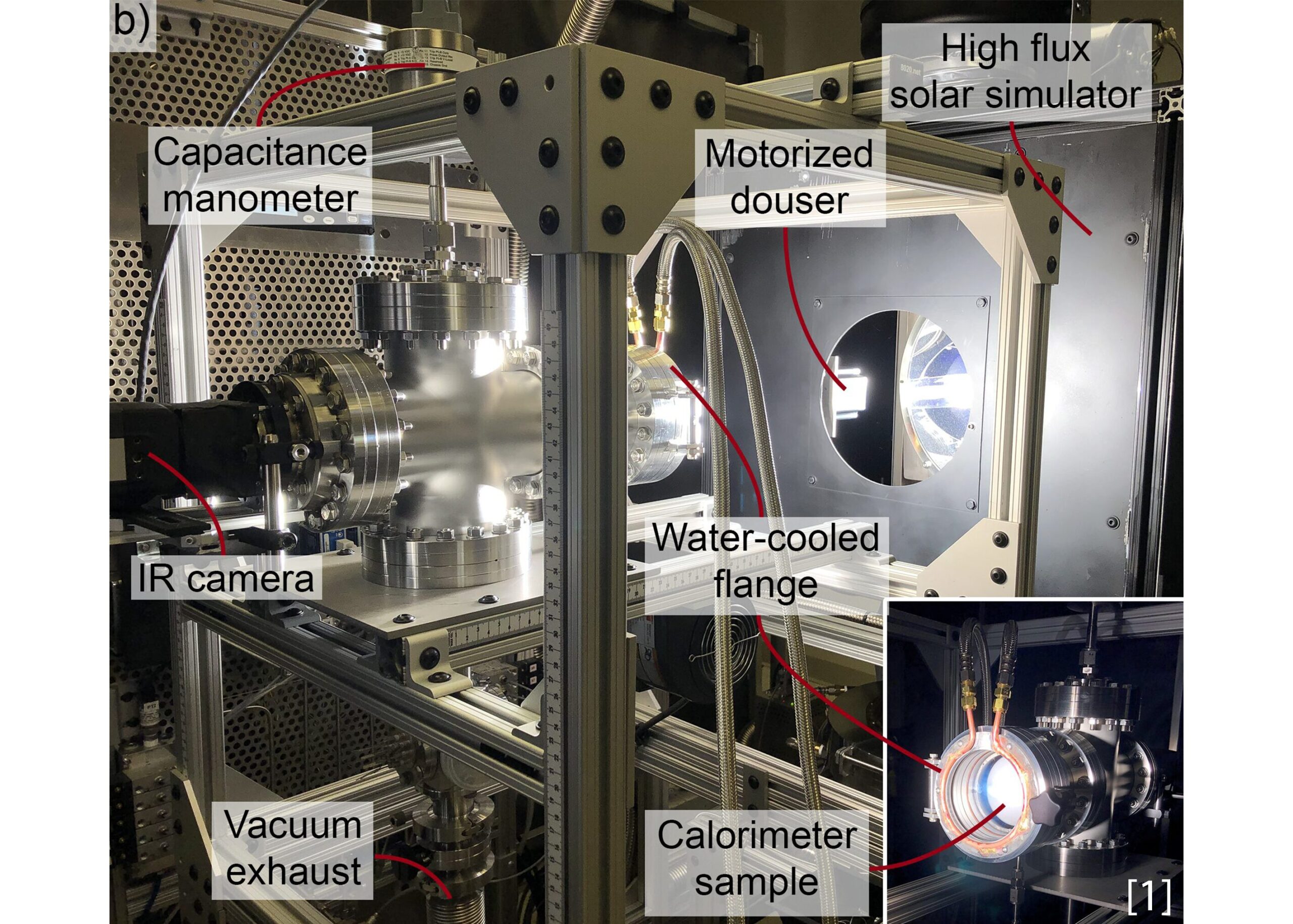
The development of sustainable graphene manufacturing technologies is essential for reducing the environmental footprint of advanced material production. This work demonstrates the use of a high-flux solar simulator and a cold-wall chemical vapor deposition reactor to directly harness concentrated solar energy for graphene synthesis. A probabilistic optimization framework based on Gaussian process regression and Bayesian optimization was employed to efficiently identify growth conditions that maximize graphene quality. The influence of processing parameters on graphene morphology, quality, and spatial uniformity was evaluated using backscattered electron imaging and Raman spectroscopy mapping. High-quality single-layer graphene and AB-stacked bilayer graphene were synthesized through a one-step, short-duration process, achieving Raman ID/IG ratios of 0.21 and 0.14, respectively. Electron diffraction analysis confirmed characteristic grain sizes of up to 5 μm for single-layer graphene and 20 μm for AB-stacked bilayer graphene. The resulting films exhibited optical transmissivities of 95.9–97.7% for single-layer graphene and 92.9–95.3% for bilayer graphene, with sheet resistances of 15.5 ± 4.6 and 3.4 ± 1.5 kΩ/sq, respectively. Further process scale-up was achieved through insolation profile engineering, resulting in graphene growth uniformity over a radius of up to 13 mm. These results demonstrate the feasibility of direct solar-powered graphene synthesis and establish a practical pathway toward sustainable production of graphene films for photonic and electronic applications.